Zimbabwe has taken a significant step towards becoming a leader in technology-driven education through the successful nationwide rollout of the Robotics, Artificial Intelligence and Emerging Technologies (RAIET) Provincial Trainers of Trainers (ToT) Programme. Spearheaded by the Ministry of Primary and Secondary Education (MoPSE) and technically implemented by Qurious Mind Zimbabwe, this landmark initiative represents a major milestone in equipping educators with the knowledge and practical skills needed to deliver future-ready learning experiences aligned with Zimbabwe’s Heritage-Based Curriculum.
Conducted throughout June 2026, the National RAIET rollout reached all ten provinces, laying a strong national foundation for integrating robotics, artificial intelligence, coding and emerging technologies into classrooms across the country. More than a professional development programme, it reflects Zimbabwe’s commitment to preparing educators and learners with the digital and innovation skills required to thrive in the Fourth Industrial Revolution.
A Nationwide Rollout Across All Ten Provinces
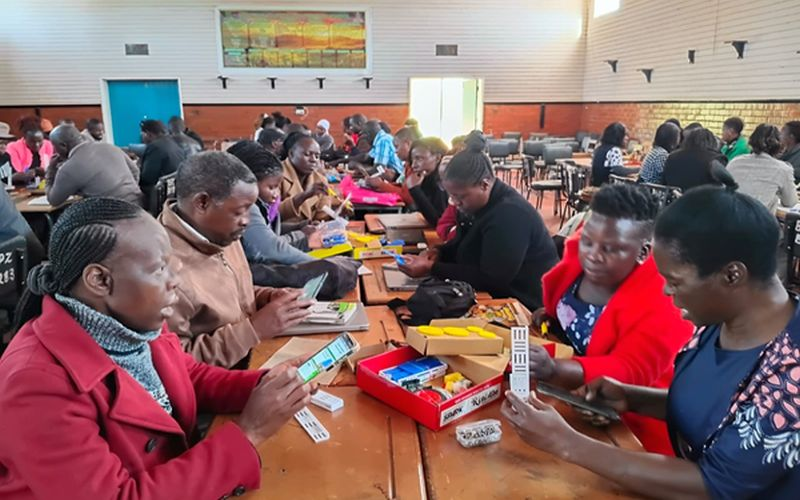
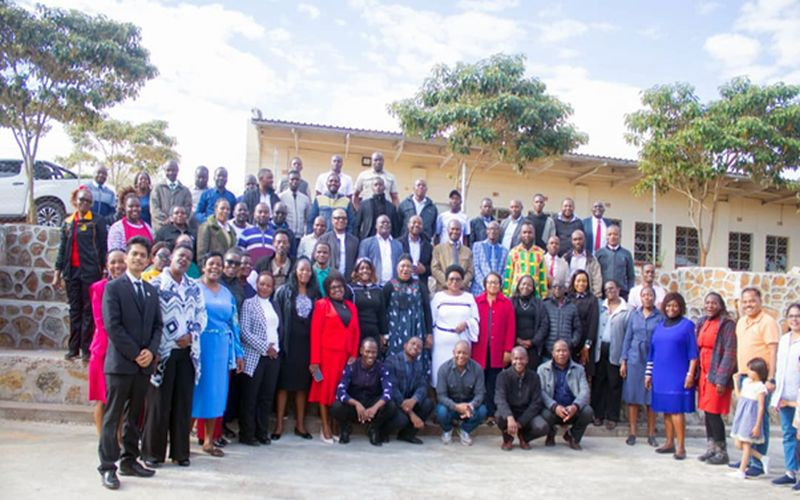
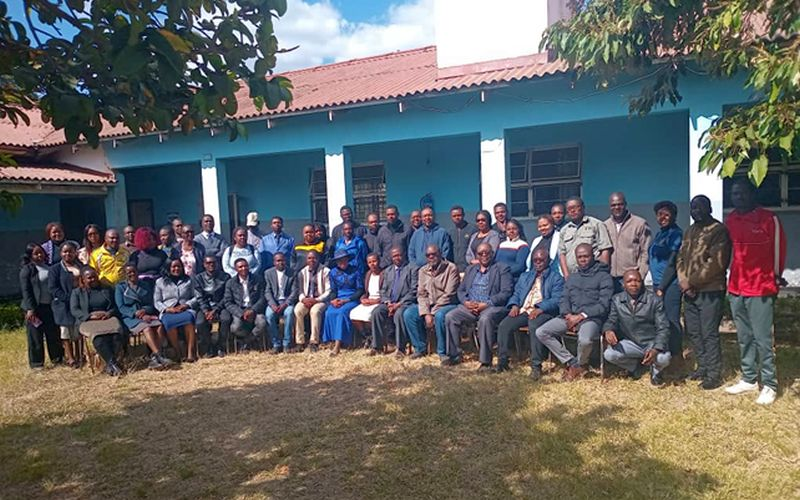
The programme commenced in Midlands Province from 1 – 3 June 2026, before expanding through nine additional provincial training waves between 15 – 27 June 2026. During this period, more than 605 teachers, Ministry officials, District Schools Inspectors, provincial education leaders and education administrators participated in intensive three-day workshops designed to build technical expertise and implementation capacity.
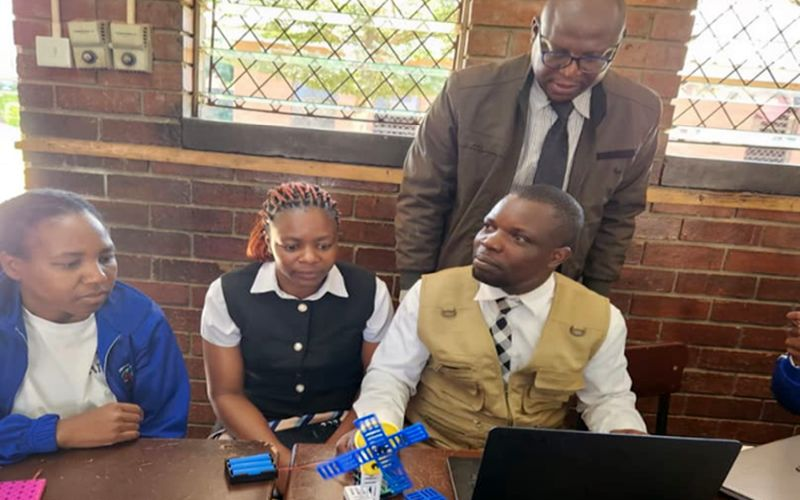
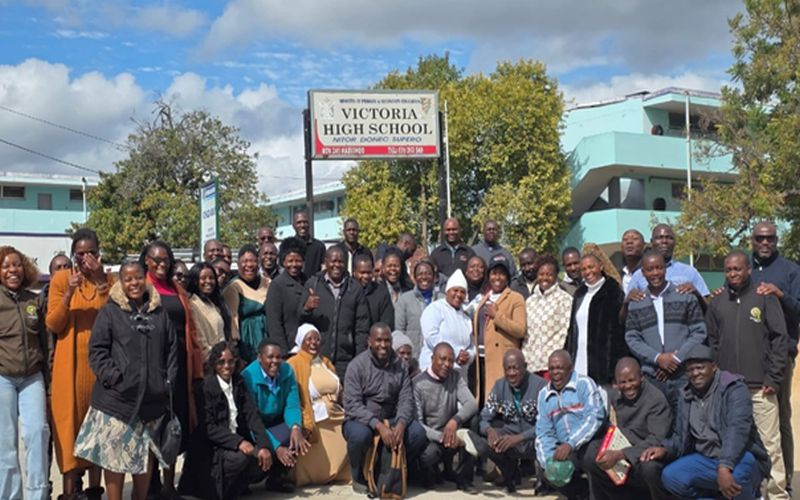
Training was successfully hosted at leading educational institutions across Zimbabwe, including Errymaple School in Zvishavane, St Christopher’s Primary School in Gwanda, Mutare Boys High School, Rakodzi High School, Eveline High School, Victoria High School, Chinhoyi Government Primary School, Mabikwa Secondary School, David Livingstone Primary School and Chipadze High School. These schools became vibrant provincial innovation hubs where educators collaborated, shared ideas and embraced practical STEM education.
The overwhelming response in Harare Province required separate training cohorts for primary and secondary school educators, ensuring every participant received quality hands-on learning experiences and sufficient access to robotics kits.
Transforming Teacher Training Through Hands-On Learning
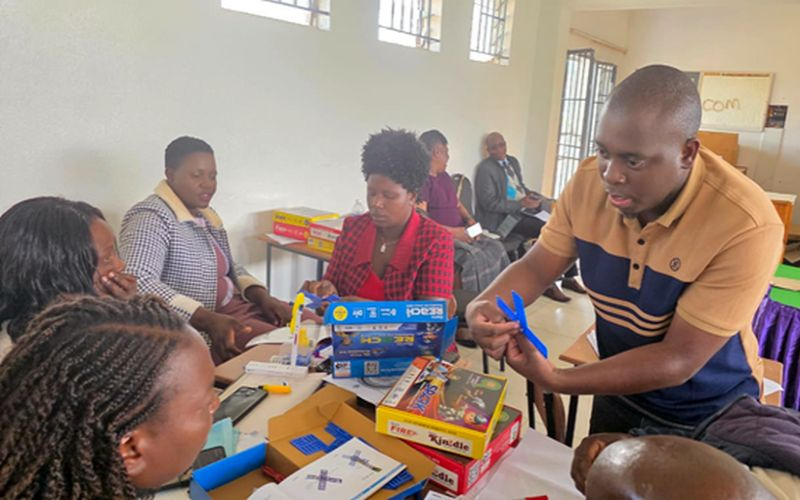
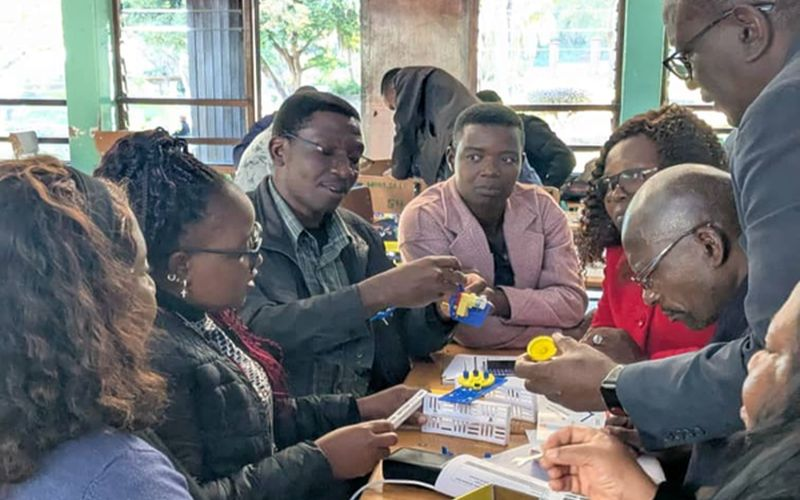
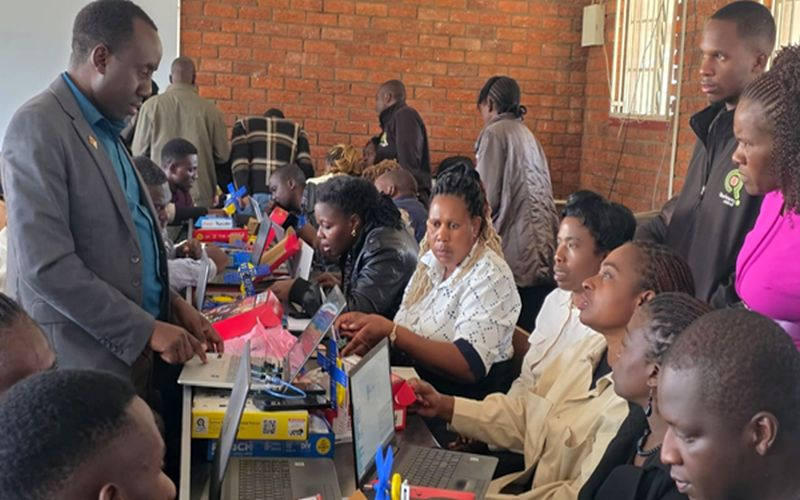
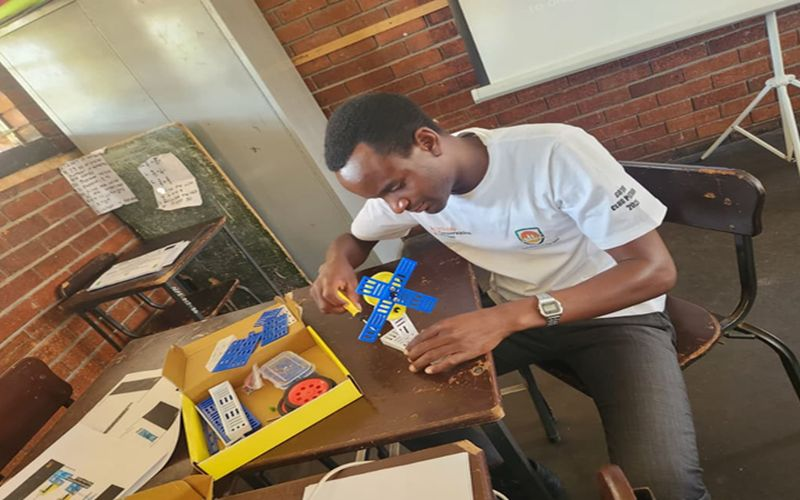
Unlike traditional lecture-based workshops, the RAIET programme adopted a practical, learner-centred approach that immersed participants in building, coding, testing, troubleshooting and improving real robotics projects.
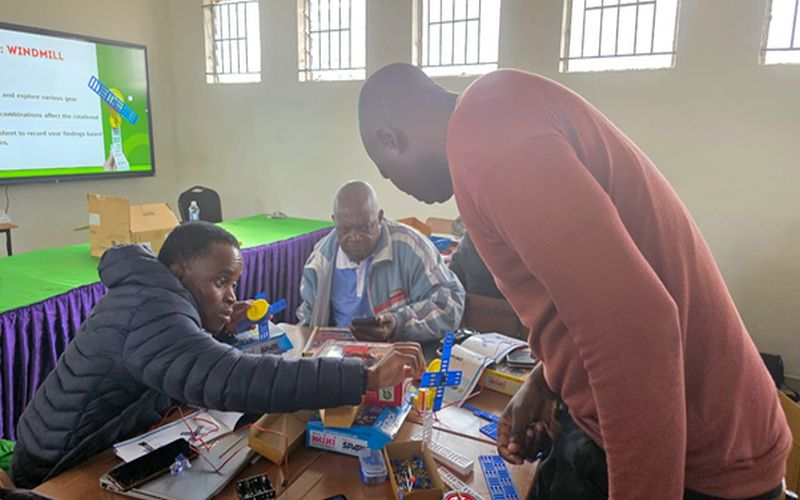
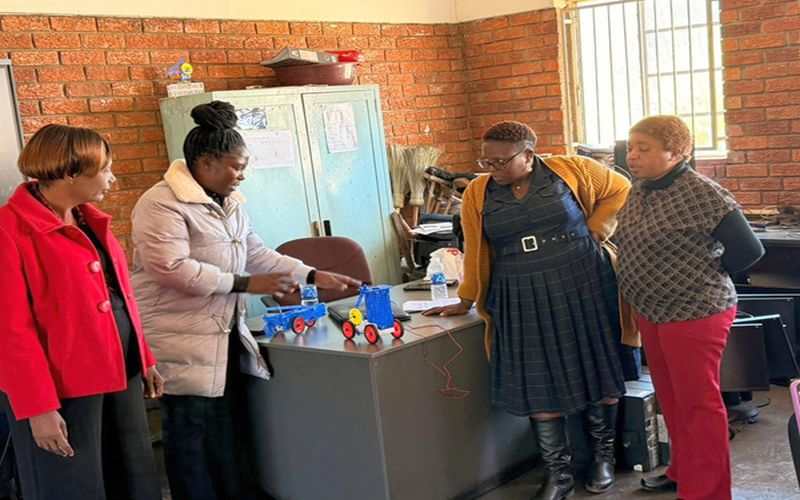
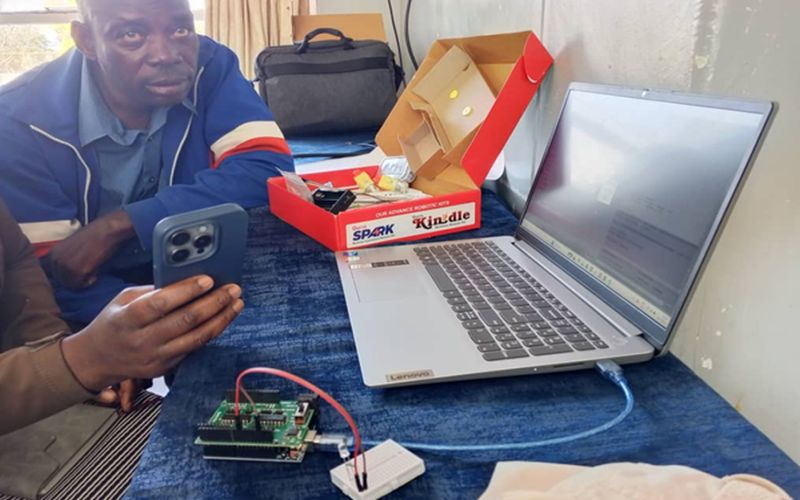
Throughout the three-day training, educators explored the fundamentals of robotics, mechanical systems, electronics, automation, coding and safe robotics kit handling. Using Qurio Robotics Kits, participants constructed functional models including windmills, cranes, electric fans, motorised vehicles and LED-powered projects.
Teachers also gained practical experience using mBlock and Arduino, learning how to configure hardware, control motors and sensors, program automated movement, operate lighting systems and solve technical challenges. Every completed project demonstrated how practical STEM education can inspire creativity, innovation, collaboration and problem-solving inside the classroom.
Connecting Robotics with Real-World Learning
One of the programme’s greatest strengths was its emphasis on interdisciplinary learning. Educators discovered how robotics and emerging technologies can be integrated across multiple learning areas, including Science, Mathematics, Information and Communication Technology (ICT), Design and Technology, Agriculture, Geography and Environmental Studies.
Rather than teaching robotics as an isolated subject, participants explored how technology can help learners investigate real community challenges. From smart agriculture and renewable energy to water conservation, environmental sustainability, automation, transportation and public safety, robotics became a practical tool for innovation and problem-solving.
This approach encourages learners to move beyond simply consuming technology and instead become creators, designers, and innovators capable of developing meaningful solutions for their communities.
Building a Strong Network of Provincial RAIET Trainers
A key achievement of the National RAIET rollout was the creation of a highly skilled provincial network of Trainers of Trainers (ToTs). These educators will now serve as regional mentors responsible for cascading knowledge and practical skills to districts, school clusters and individual schools across Zimbabwe.
Each provincial team concluded the programme by developing implementation strategies and district-level training plans, demonstrating a strong commitment to moving beyond training into sustained classroom implementation.
This structured cascade model will help ensure consistency, quality and long-term sustainability as RAIET expands throughout the country’s education system.
Scaling RAIET to Every School in Zimbabwe
The successful provincial rollout marks only the beginning of Zimbabwe’s ambitious national vision.
The next phase aims to expand RAIET implementation across all 72 districts, reaching approximately 1,080 school clusters and an initial 5,400 schools, before progressively extending the programme to nearly 11,700 schools nationwide.
This expansion is designed to create lasting educational impact through regular robotics lessons, coding activities, learner innovation projects, active school RAIET clubs, innovation exhibitions and structured robotics competitions that encourage creativity, teamwork and entrepreneurial thinking.
Supporting Zimbabwe’s Heritage-Based Curriculum
The National RAIET initiative directly supports Zimbabwe’s Heritage-Based Curriculum by transforming theoretical learning into practical, skills-based education.
Instead of preparing learners merely to understand technology, the programme empowers them to design, build, test and refine innovative solutions using robotics, artificial intelligence, coding and emerging technologies. This practical approach nurtures critical thinking, creativity, collaboration, communication and digital literacy — essential competencies for success in the modern world.
Empowering Educators to Shape the Next Generation
The enthusiasm displayed throughout the provincial rollout clearly demonstrated that Zimbabwean educators are ready to embrace educational transformation. Teachers from diverse backgrounds actively collaborated, experimented with new technologies and developed the confidence needed to introduce innovative teaching methodologies into their classrooms.
For Qurious Mind Zimbabwe, the successful implementation of the National Provincial Trainers of Trainers programme reinforces a shared vision with the Ministry of Primary and Secondary Education — to create classrooms where innovation becomes part of everyday learning and every learner has the opportunity to develop future-ready skills.
Looking Ahead: Igniting Innovation Across Zimbabwe
As RAIET progresses into districts, school clusters and thousands of classrooms nationwide, the momentum generated during the provincial rollout will continue shaping the future of STEM education in Zimbabwe.
The spark has been ignited. The next challenge is to sustain that momentum by empowering every district, every school, every teacher and ultimately every learner to embrace robotics, artificial intelligence and emerging technologies as tools for innovation and national development.
Zimbabwe is not simply preparing its learners for the future—it is empowering them to build it.