Robotics Summer Camp in Goa 2026 Successfully Conducted at Sankhali
Qurious Mind Infotainment Private Limited successfully organized a Robotics Summer Camp in Goa titled Robotics Construction Level – 1 at Shivsmruti Khedekar Hall in Sankhali. Conducted over 10 days (20 hours), the camp provided school students with an engaging introduction to robotics, engineering and STEM education through hands-on learning experiences.
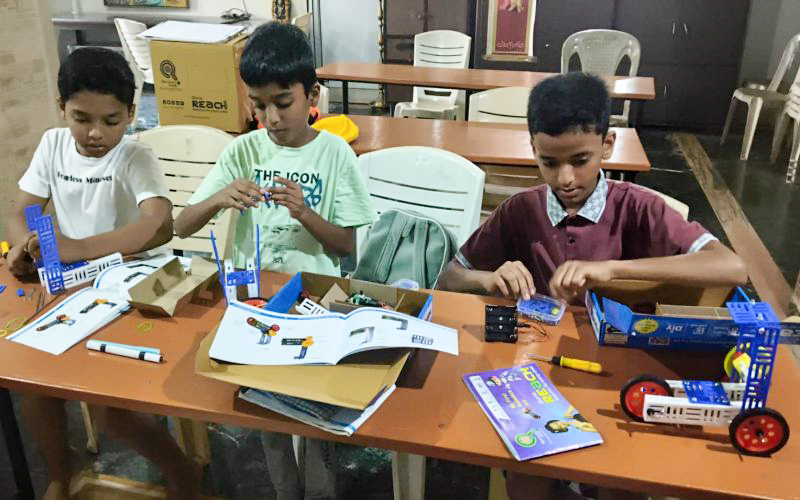
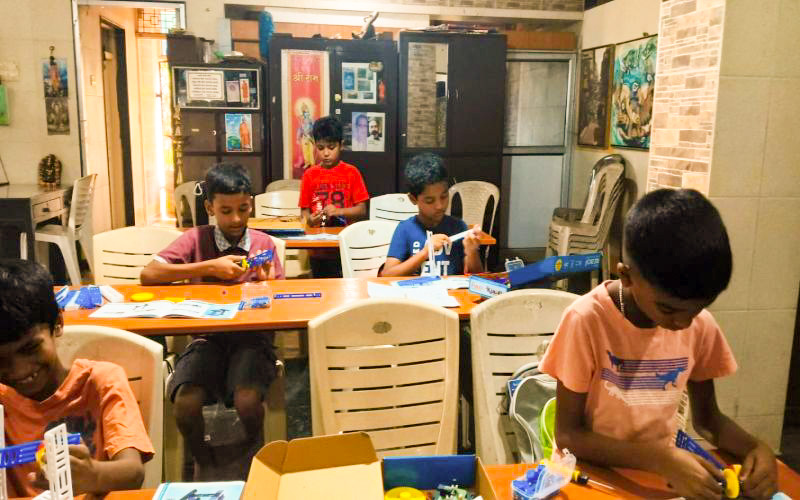
Led by trainer Anushka Maurya, the program focused on developing creativity, logical thinking, teamwork and problem-solving skills using the Qurio Reach Robotics Kit. Five students actively participated in the camp, exploring robotics concepts through model construction, practical demonstrations, discussions, assessments and project-based activities.
Objectives of the Summer Camp
The major objectives of the Robotics Summer Camp were:
- To introduce students to the fundamentals of robotics.
- To develop creativity and problem-solving skills.
- To provide practical exposure through robotic model construction.
- To improve teamwork, communication and analytical thinking.
- To explain basic mechanical and robotic principles.
- To create awareness about modern robotics applications in daily life.
- To encourage students to explore STEM-related fields and innovation.
Camp Structure and Learning Methodology
The Robotics Summer Camp in Goa followed a structured learning approach that combined theory with practical application. Each session introduced scientific and engineering concepts, followed by hands-on activities where students applied their learning by building working robotic models.
The training methodology included interactive lectures, live demonstrations, team-based activities, troubleshooting exercises, revision sessions, quizzes, assessments and independent project work.
Day-by-Day Learning Highlights
Day-wise Learning Highlights –
Day 1: Introduction to Robotics
Students were introduced to the camp objectives, robotics fundamentals, and the history of robotics. They built their first robotic model, Robuggi, and learned basic assembly, balancing, and movement control concepts.
Day 2: Gears and Motion Transfer
The session focused on gears, gear combinations, and gear ratios. Students constructed a Windmill model to understand motion transfer, rotational mechanisms, speed, and torque.
Day 3: Motors and Structural Design
Students learned about motors, RPM, torque, and robotic structures. The Merry Go Round model helped them explore circular motion and motor-driven mechanisms.
Day 4: Torque and Robotics Applications
The concepts of robotics ethics and real-world applications were discussed. Through the Bullock Cart model, students observed the effects of torque, weight distribution, and stability.
Day 5: Balance and Leverage
Students explored balance, fulcrum points, and leverage by constructing a Swing Construction model, gaining insights into force distribution and mechanical movement.
Day 6: Sensors and Coordination
The importance of sensors in robotics was introduced through the Violin Player model, demonstrating synchronized movement and mechanical coordination.
Day 7: Gravity and Motion
Students learned about free-fall motion and the role of gravity in robotics. A quiz competition was also conducted to reinforce key concepts learned during the camp.
Day 8: Revision and Advanced Concepts
A comprehensive revision session covered gears, motors, torque and robotic mechanisms. Students built a Massager model to study vibration and rotational motion.
Day 9: Theory Assessment
Students completed an MCQ-based assessment covering major robotics concepts, including gears, sensors, motion and torque. They also refined and completed unfinished robotic models.
Day 10: Robotics Hackathon
The camp concluded with a Robotics Hackathon where students independently designed and built robotic projects. Participants showcased their creativity, problem-solving abilities and technical skills while presenting their projects to the trainer and fellow students.
Students confidently presented their projects, demonstrating the knowledge and skills acquired throughout the program.
Student Participation and Achievements
All five participants — Nuhzaid Sheikh, Anant Mainkar, Ayaan Pachapur, Vivaan Tendulkar and Tanish Naik — actively engaged in both practical and theoretical sessions. Their enthusiasm, teamwork and ability to apply engineering concepts reflected the success of the training program.
The assessment results and project presentations confirmed a strong understanding of robotics fundamentals, including gears, motors, sensors, torque and mechanical systems.
Certificate Distribution Ceremony
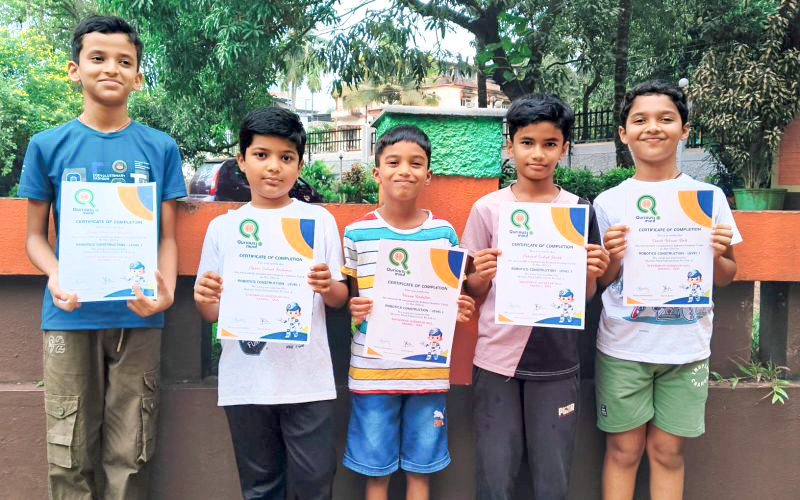
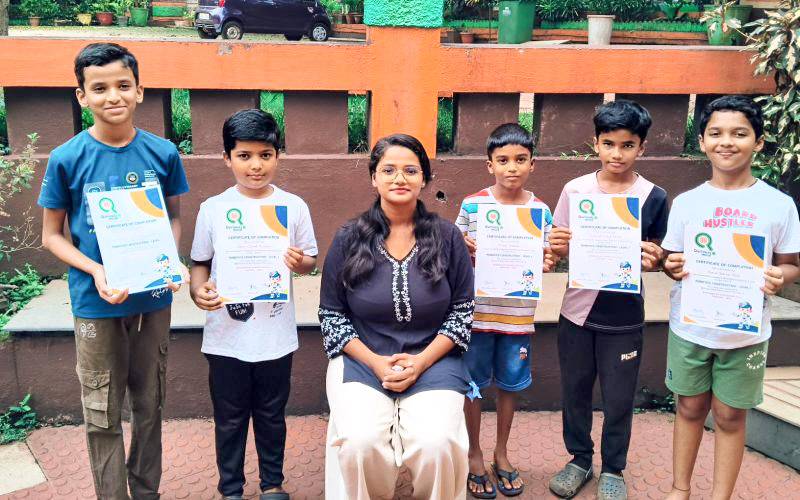
The camp concluded with a certificate distribution ceremony recognizing the efforts and achievements of all participants. Students received certificates for successfully completing the Robotics Construction Level – 1 program and expressed excitement about their learning experience.
Conclusion
The Robotics Summer Camp in Goa 2026 was a highly successful STEM learning initiative that combined theoretical knowledge with practical application. Through robotic model construction, assessments and project-based learning, students gained valuable exposure to robotics, engineering and technology.
The program helped participants build confidence, creativity, teamwork and analytical thinking skills while inspiring them to further explore STEM education and future innovation opportunities.