
Hands-on learning is one of the most powerful ways to build real understanding in science and technology. Taking this belief forward, Qurious Mind Infotainment Pvt Ltd conducted an engaging and practical robotics workshop at Vadem Nagar Shikshan Seva Mandal’s Shree Vishwanath Arlekar (Dada Arlekar) Memorial Higher Secondary School of Arts, Commerce and Science, located at Vadem Nagar in Vasco, Goa.
The workshop was attended by 33 students from the 11th Science stream, and was specially designed with the aim of introducing them to real-world applications of robotics, electronics and programming.
The enthusiastic participation of the Science stream students clearly reflected the school’s commitment to innovation and technology-driven education.
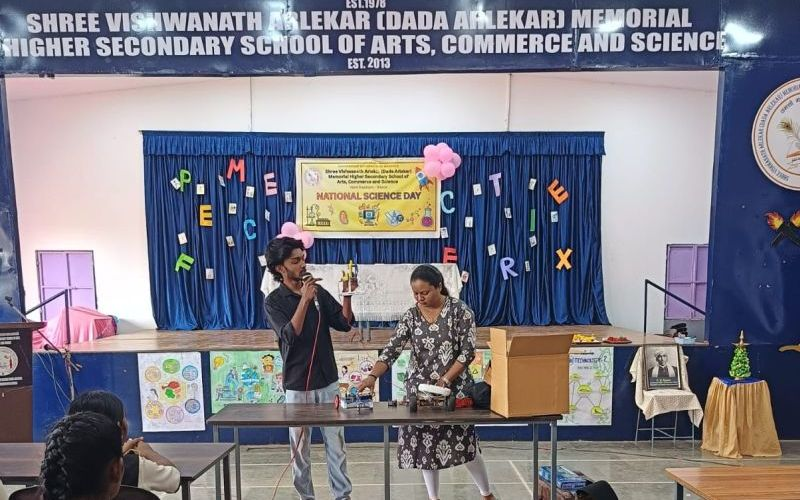
The workshop began with a brief introduction to Qurious Mind Infotainment Pvt Ltd, a company dedicated to promoting robotics, coding and STEM education among school students. The session was led by Riya Shirodkar and Tushar Shirodkar. They introduced themselves, shared their journey in robotics education and explained how hands-on STEM learning prepares students for future careers in engineering, technology and innovation.
The focus was clear: Robotics is not just about machines — it’s about problem-solving, creativity, teamwork and logical thinking.
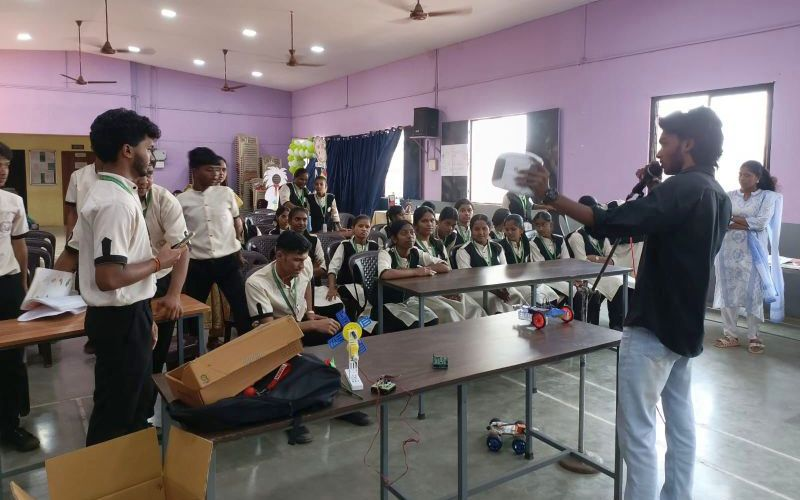
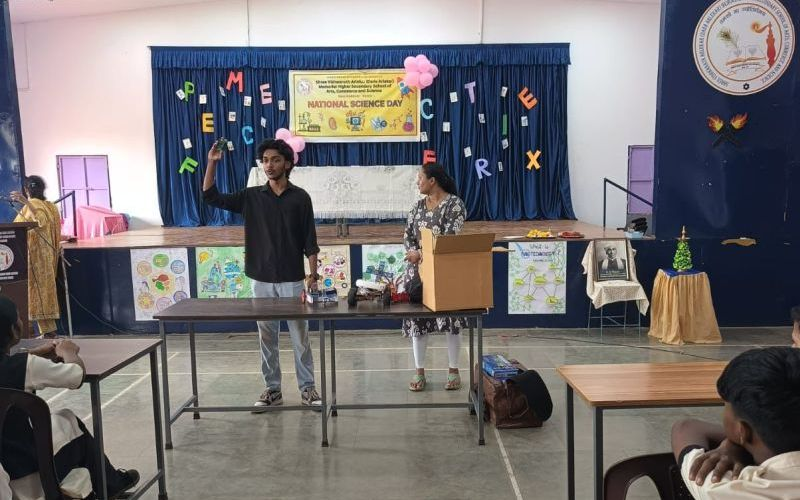
To spark curiosity, the trainers demonstrated previously built robotics models, including:
- A Remote Controlled Windmill
- An Edge Avoiding Vehicle
- A Remote Controlled Car
Each model was explained in detail — from the mechanical structure to the electronics and programming logic behind it. The edge-avoiding vehicle, in particular, grabbed attention as students observed how sensors detect edges and prevent the robot from falling. The remote-controlled car demonstrated wireless communication and motor control, while the windmill model introduced the concept of rotational motion and speed optimization.
Students were encouraged to explore and test the models themselves. This interactive approach made the session highly engaging and helped break the fear often associated with electronics and coding.
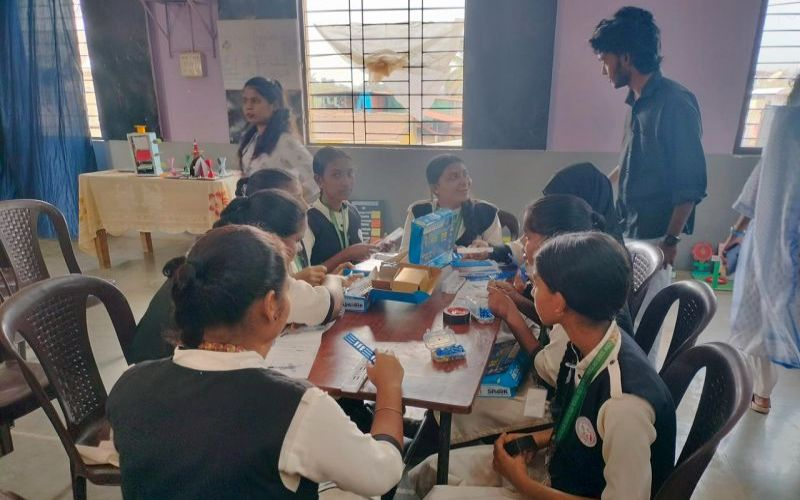
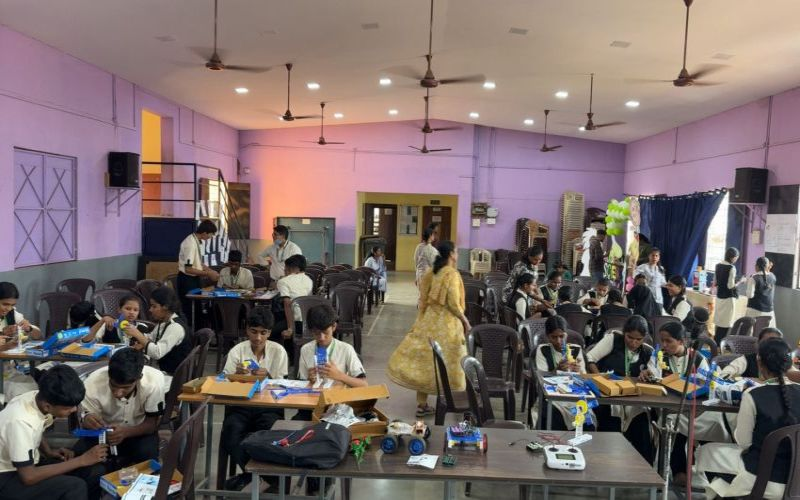
A Group Activity for Building a Windmill Using the Qurio Reach Robotic Kit was conducted. The 33 students were divided into two groups and assigned a hands-on task: – to Build a working windmill model using the Qurio Reach robotic kit.
This activity focused on:
- Understanding mechanical assembly
- Learning motor connections
- Observing rotational speed
- Experimenting with blade design
Students collaborated within their groups, discussing how to assemble the structure efficiently. The trainers guided them in connecting components properly and ensuring stable construction. Once the basic windmill model was built, the challenge level was upgraded. Students were then asked to explore ways to increase the speed of their windmill model. This simple challenge introduced deeper engineering concepts such as:
- Gear ratio
- Blade angle adjustment
- Motor power optimization
- Structural stability
Instead of giving direct answers, the trainers encouraged experimentation. Students modified blade designs, adjusted angles and observed the differences in output speed. This approach promoted critical thinking and problem-solving — two essential skills in robotics and engineering.
After the mechanical activity, the workshop moved into electronics and programming. Students were introduced to the Arduino board – one of the most popular microcontroller platforms used worldwide for robotics and automation projects. The trainers explained:
- What a microcontroller is
- How Arduino acts as the “brain” of a robot
- Basics of Arduino programming
- How to upload code to the board
- How sensors and motors are controlled through programming
For many students, this was their first exposure to real coding in a hardware environment. They learned how simple lines of code can control physical movement – making the connection between software and real-world output. This part of the workshop helped bridge the gap between theory learned in classrooms and practical technological applications.
The robotics workshop achieved multiple learning outcomes:
- Increased student engagement in STEM
- Practical exposure to robotics tools
- Improved teamwork and collaboration
- Introduction to Arduino programming
- Encouraged innovative thinking
The robotics workshop conducted was more than just a session — it was a step toward building future innovators. With 33 enthusiastic Science students actively participating, experimenting, and learning, the session successfully ignited curiosity and technical confidence. As schools across Goa increasingly recognize the importance of robotics education, initiatives like these continue to shape the next generation of engineers, creators, and problem-solvers.
#RoboticsWorkshop #STEMEducation #QuriousMind #ArduinoLearning #HandsOnLearning #RoboticsInGoa #InnovationInSchools #FutureEngineers #ScienceEducation #VascoGoa